James Hardie Junior ADU Conversion: The Fresno Owner’s Guide
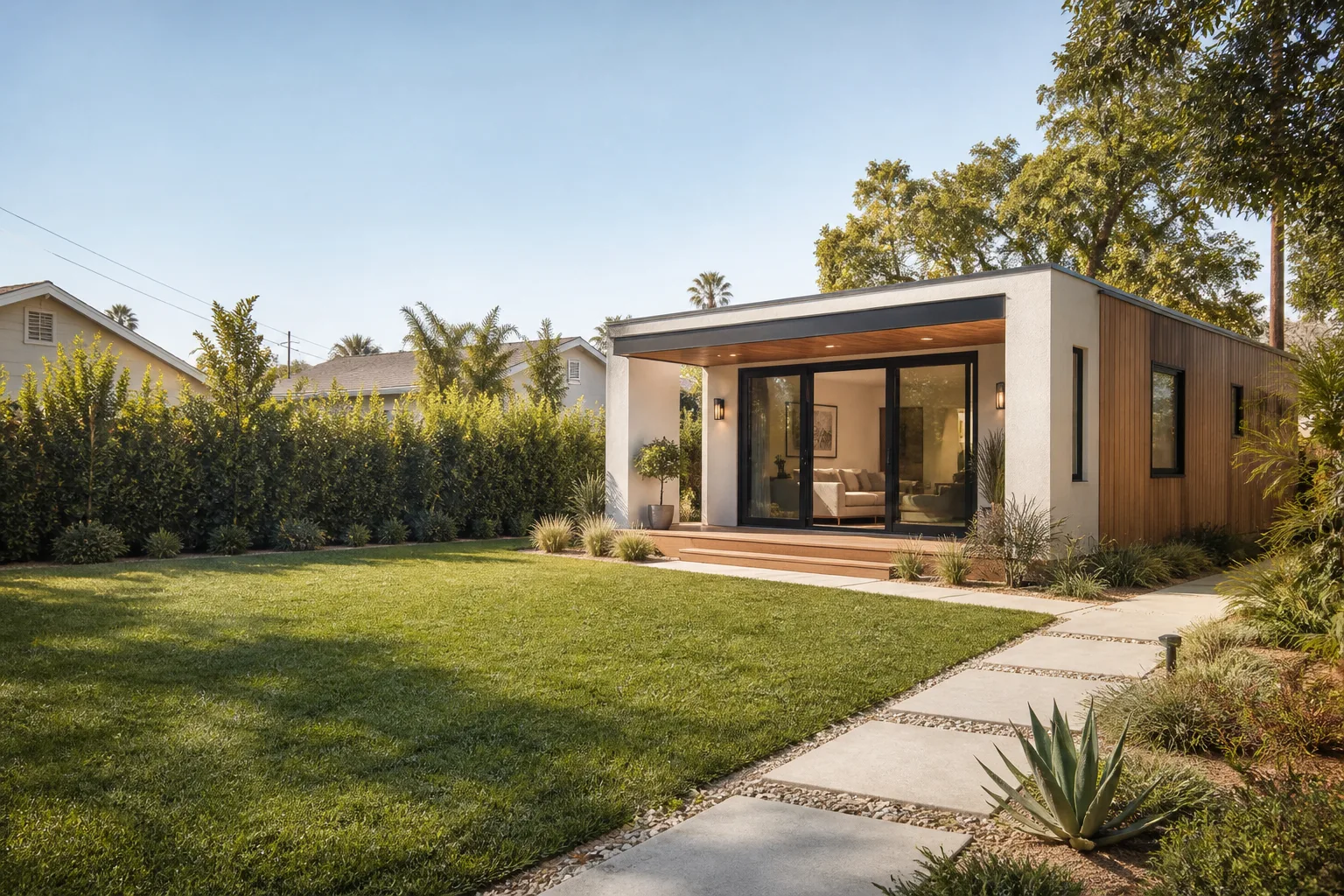
If you’re searching for James Hardie Junior ADU conversion help in Fresno, here’s the short version: we match, source, and install the correct Hardie-compatible flashing, trim, and siding transitions for junior ADU conversions, and most complete exterior cladding conversions run $12,000 to $28,000 installed depending on square footage and current wall condition. We carry HardiePlank lap siding, HardiePanel vertical siding, and the full trim line on our trucks, so we can usually begin work within a week of your written estimate. The way most Fresno homeowners discover a failure is visual: gaps opening where the new ADU wall meets the original house, water staining under windows, or HardieTrim pulling away at corners after Fresno’s hot summers and wet winters cycle through their expansion-contraction routine.
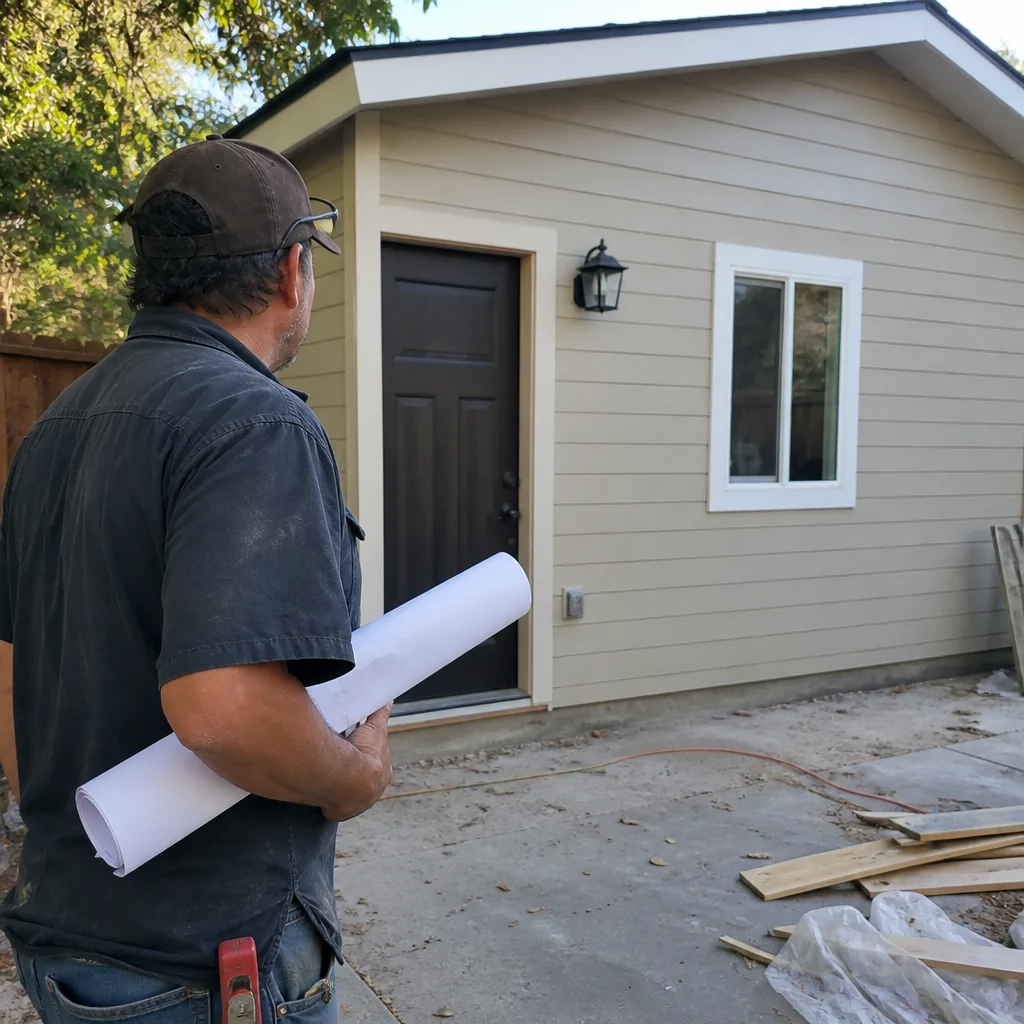
Which James Hardie Models This Applies To
This page covers the James Hardie exterior systems most commonly used on junior ADU conversions in Fresno: HardiePlank HZ5 lap siding (5/16″ thick, available in 4″, 6″, and 8″ exposures), HardiePanel HZ5 vertical siding (5/16″ thick, 4’x8′ and 4’x10′ sheets), and the HardieTrim HZ5 boards (5/4″ and 4/4″ thickness) used at corners, windows, and the transition where the ADU meets the existing structure. The HZ5 designation matters in Fresno: it’s the HardieZone system rated for hot, dry climates with high UV exposure, and it’s the only HardieZone we recommend for the Central Valley. If your original build used HZ10 product (rated for wetter, colder climates), the movement tolerances are different, and you’ll see premature joint separation here. We can identify what you have by checking the nailing pattern, joint treatment, and any visible product codes on the back of a pulled piece.
On the OEM versus aftermarket question: for the Hardie product itself, we use only James Hardie manufactured siding and trim. The getting-harder-to-find generic fiber cement boards from other manufacturers don’t match Hardie’s color, texture, or warranty integration, and in Fresno’s sun they weather visibly differently within two years. For flashing and fasteners, which is where most conversions actually fail, we use G90 galvanized or stainless flashing and hot-dipped galvanized or stainless nails per Hardie’s published fastener schedule, not the electro-galvanized boxes you’ll find at the local big-box store. That substitution is the single most common root cause of failing fiber cement siding we see across the Tower District and northeast Fresno.
Signs Your James Hardie Junior ADU Conversion Is Failing
- Joint separation at the ADU-to-house transition. The two structures settle differently, and if the original installer used no slip joint or expansion gap, the Hardie boards pull apart. This is the most common failure in Fresno’s clay soil zones.
- Water staining or swelling at the bottom edge of HardiePanel. This usually means the panels were installed too close to grade or the roof drainage is dumping water against the wall instead of into a gutter. Hardie needs a minimum 6″ clearance above finished grade.
- HardieTrim pulling away at outside corners. Fresno’s 30+ degree daily temperature swings in spring and fall stress the corner trim first. If you can slide a putty knife behind the trim, the attachment has failed and needs re-securing before moisture gets behind the siding.
- Cracks radiating from fastener heads. This tells us the installer drove nails too deep or used a non-pneumatic hammer, shattering the fiber cement around each fastener. Once cracked, the board cannot be repaired, only replaced.
- Chalky, faded color with visible raw fiber at board ends. Hardie’s baked-on ColorPlus finish lasts 15 years on paper, but Fresno’s UV exposure shortens that on south- and west-facing walls to about 10 to 12. Caulked joints that have hardened and split accelerate the deterioration at the board ends.
Replacement Cost & What’s Included
For a Fresno junior ADU conversion, here’s what we typically quote. A partial re-cladding project, meaning we’re replacing failed sections and re-flashing the transition, runs $6,000 to $14,000. A full exterior re-cladding with new HardiePlank, HardieTrim, flashing, and painted finish typically lands between $12,000 and $28,000 for a 400 to 800 square foot junior ADU. The range comes down to three things: how much underlying framing needs repair after moisture intrusion, whether we need to bring the wall-roof intersection up to current code, and whether you choose primed or ColorPlus pre-finished product. Every quote includes demolition and disposal, flashing replacement, the Hardie product, fasteners, paint or pre-finish, and a written line-item breakdown before any work begins.
Our workmanship is covered by the 365-Day Done Right Promise. If any element of the re-cladding fails within one calendar year of completion, Sutton ADU Fresno returns and makes it right at no charge. That includes a free second visit if something looks off, no haggling, no fee.
DIY or Call Us?
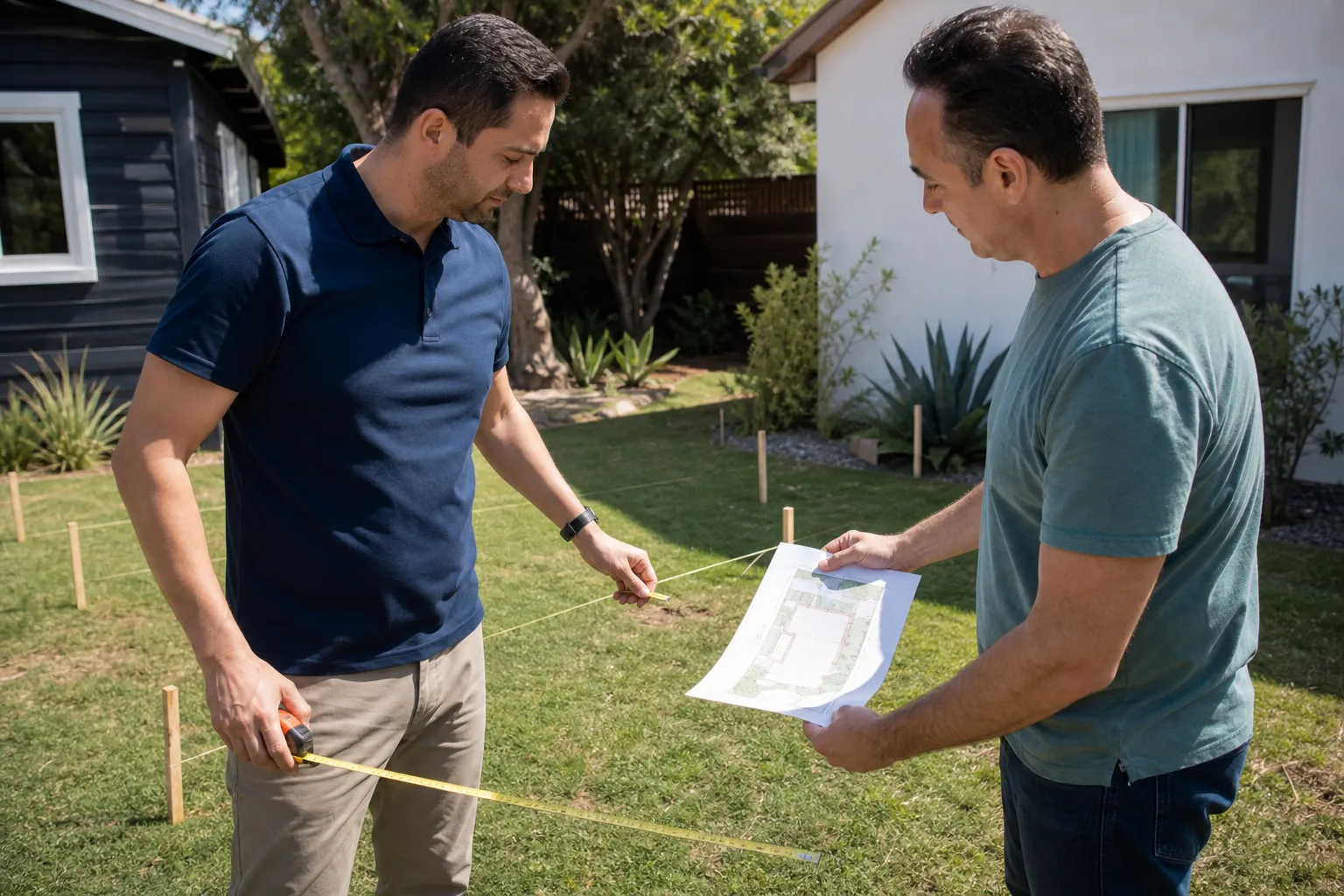
You can absolutely do the inspection part yourself. Check the joints at the ADU-to-house transition, look for water staining at the bottom edge of panels, and push gently on corner trim to see if it’s still tight. That’ll tell you whether you have a problem worth acting on. Where DIY goes wrong is the repair. Fiber cement siding is heavy and brittle, and cutting it requires proper dust control and the right blades; Hardie dust is silica and not something you want in your lungs. The fastening schedule is specific, and if you get it wrong on the existing wall, you’ve made the next repair bigger rather than smaller. For the transition between structures, there’s also technically a structural movement consideration, which means the fix is often not just cosmetic. If you’ve spotted failing Hardie on your Fresno junior ADU, call us at (559) 785-0627 and we’ll walk the exterior with you, explain what’s failing, and write it up. Tell me what you actually need, then we’ll figure out what makes sense.
FAQs
In Fresno’s high-UV climate, expect 25 to 35 years of serviceable life from properly installed HardiePlank or HardiePanel, with painted surfaces needing repainting every 10 to 15 years and the ColorPlus finish holding its color for roughly 10 to 12 on south-facing walls. The failure point is almost never the board itself; it’s the flashing, fasteners, and joint treatment from the original install. Call (559) 785-0627 for an honest condition assessment, free.
Cracked fiber cement boards cannot be structurally repaired; they must be replaced. Joint separation can sometimes be re-flashed and re-trimmed if the underlying wall is still dry, but visible cracks radiating from fasteners or through the board itself are a replacement-level issue. We’ll tell you which situation you have before quoting anything.
A typical partial re-cladding takes 3 to 5 working days on site; a full exterior re-cladding with new trim and paint runs 7 to 10 working days, weather permitting. We stage all materials before the first day of work so the project doesn’t stall waiting on product.
Yes. We keep HardiePlank, HardiePanel, and HardieTrim stock in the Fresno yard, along with the correct flashing and fastener inventory, so we don’t have to wait on supplier lead times for common repairs. We also work with exterior systems from Abodu, Cover, and Dvele if your junior ADU was originally built by one of those manufacturers. Call (559) 785-0627 to confirm we have your specific profile in stock.
Written by Miles Hartwell, Owner, Sutton ADU Fresno at Sutton ADU Fresno, serving Fresno and nearby areas.