Cover Site Prep & Utilities: The Fresno Owner’s Guide
Site prep and utilities for a Cover home in Fresno typically run $18,000 to $45,000 installed, depending on lot conditions, utility distances, and what’s already on your property. We stock the common components on our trucks and can usually start within two weeks of your site assessment. Most Fresno owners discover a problem with site work the hard way: a panel that trips in summer heat, water pressure that drops when the irrigation kicks on, or a foundation pad that’s shifted after a wet winter.
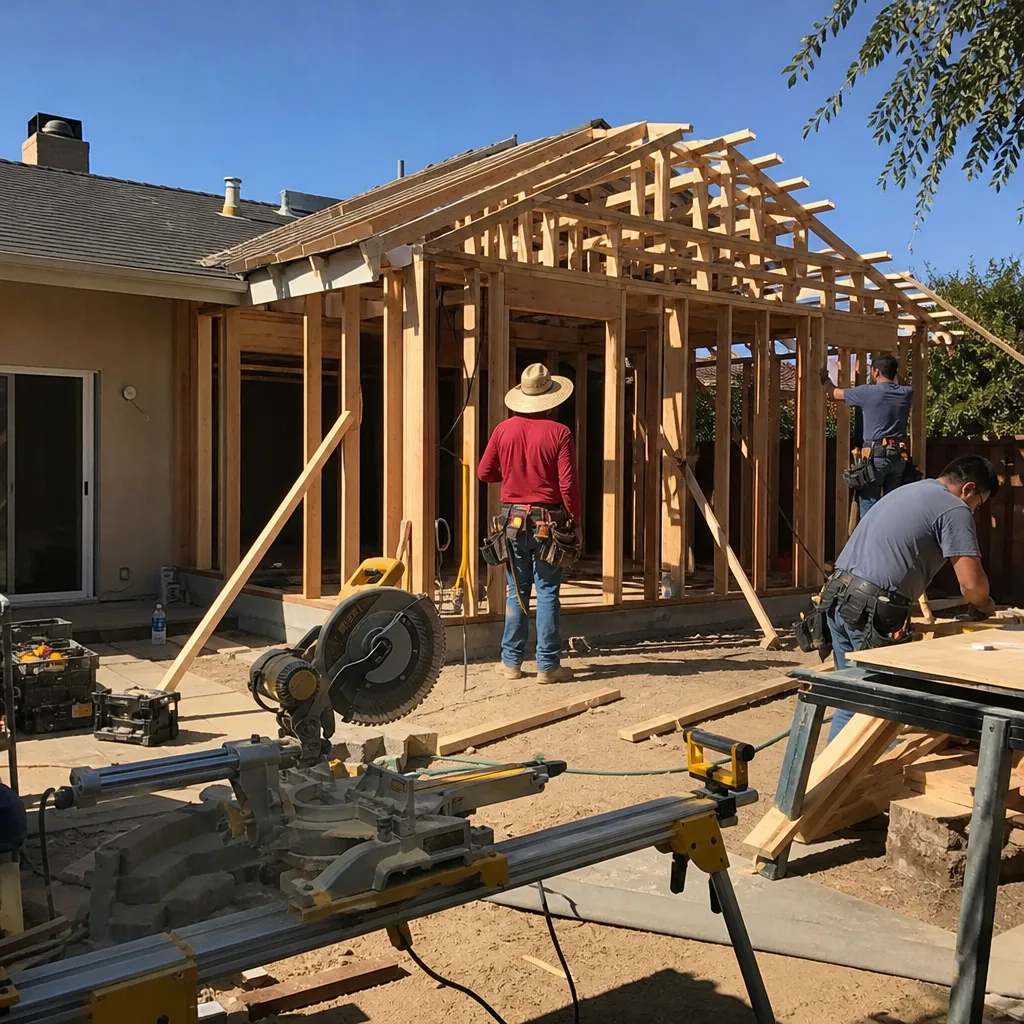
The site prep and utilities package is the unglamorous engine of your Cover home. It includes grading, compacted base, utility trenching, connections to city services, and the panel work that ties everything into your existing meter. When it’s done right, you never think about it. When it’s wrong, nothing else in the house works the way it should. Miles Hartwell has walked enough Fresno lots to know that the difference between a smooth Cover install and a six-month headache usually comes down to what’s in the ground before the modules ever arrive.
Which Cover Models This Applies To
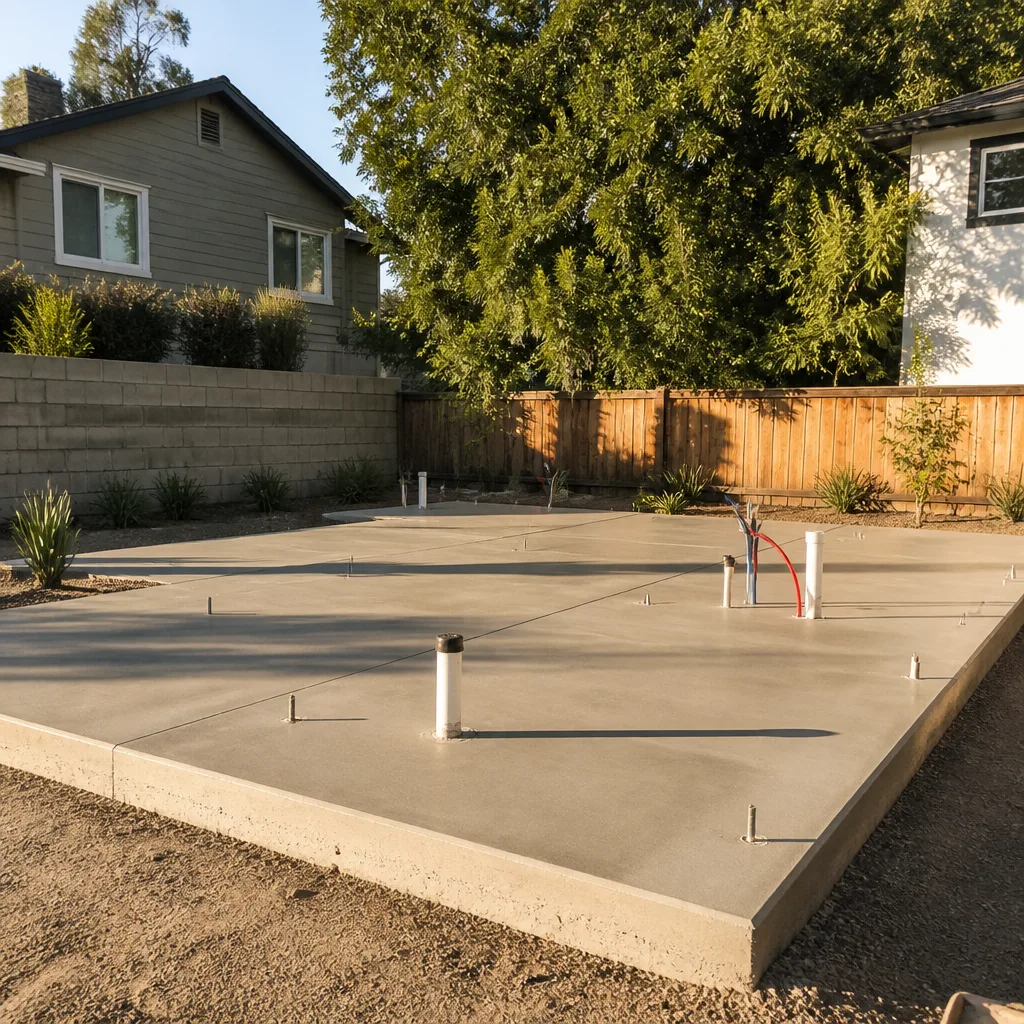
Site prep and utilities are model-agnostic: every Cover unit, whether it’s a studio, one-bedroom, or two-bedroom configuration, sits on the same class of foundation and ties into the same municipal services. What changes between models is the panel load calculation and the utility trench depth, because square footage and appliance load dictate what your existing service can handle. If you’re adding a Cover to a property with a 100-amp panel, you’ll likely need an upgrade or a subpanel; a 200-amp service usually absorbs a one-bedroom unit without much drama.
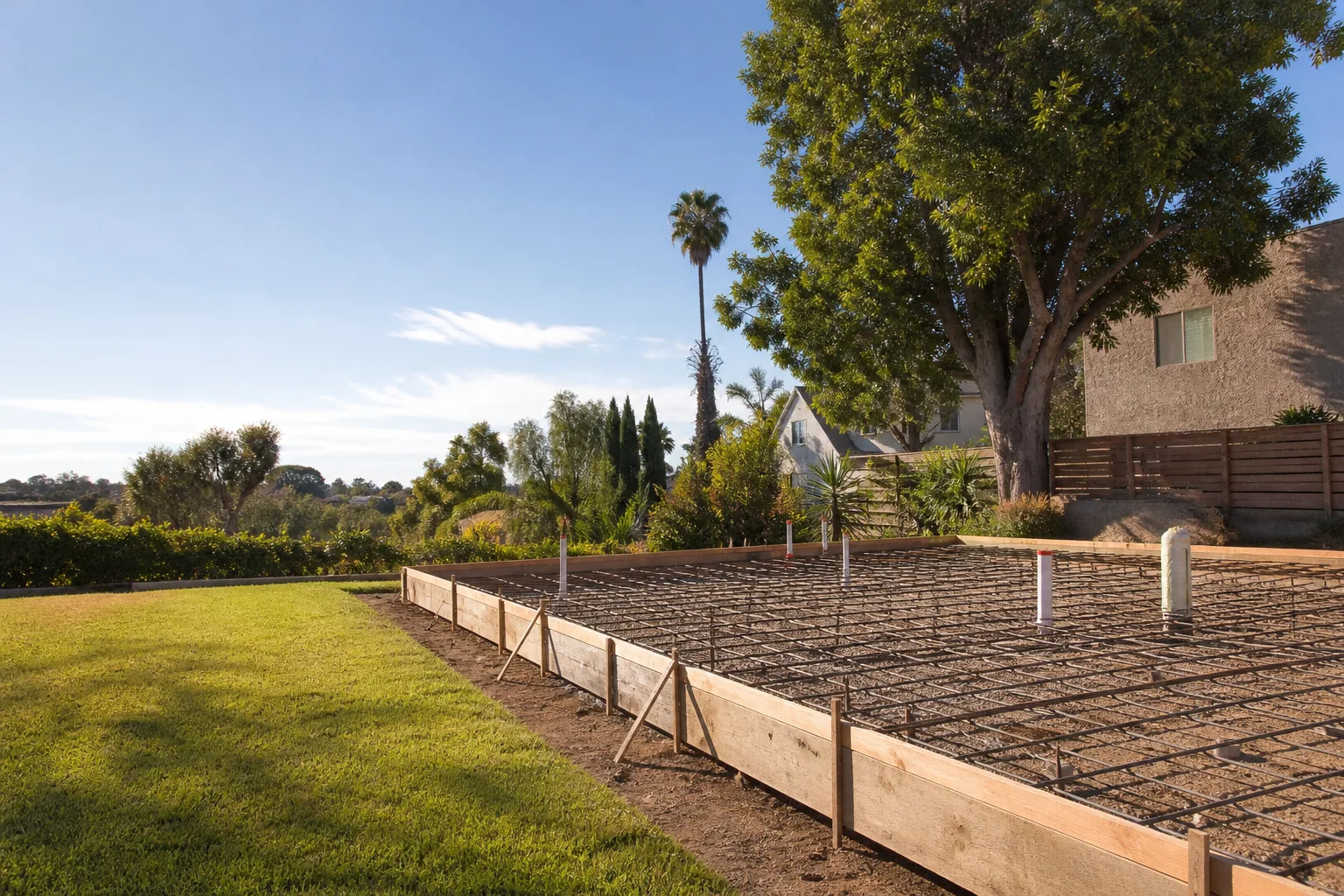
Cover’s site requirements are more demanding than a backyard shed and less forgiving than a stick-built addition. The pad needs to be level within an eighth of an inch over ten feet, because the modules bolt together and any deviation telegraphs through the entire structure. Fresno’s clay-heavy soil expands and contracts with moisture, so we almost always recommend a compacted gravel base over native soil rather than pouring directly on grade. For the utilities side, Cover specifies a dedicated sewer lateral and a water line with a pressure regulator set to 60 psi, which matches what the city delivers in most Fresno neighborhoods without losing flow.
When it comes to parts, Sutton ADU Fresno is an independent service provider, not affiliated with Cover. We source OEM components where they matter, foundation anchors and panel brackets especially, and use proven aftermarket equivalents for trenching materials, conduit, and backfill where the spec is functionally identical and the quality is the same.
Signs Your Cover Site Prep & Utilities Is Failing
- Doors that stick or gaps that appear between modules. Fresno’s clay soil shifts with moisture, and a pad that wasn’t compacted properly will settle unevenly. You’ll notice it first at the module seams or in doors that suddenly need a push to latch. The fix usually involves lifting and re-shimming, not a full re-pad.
- Breakers that trip when both the AC and a second appliance run. This points to an undersized subpanel or a load calculation that didn’t account for Fresno’s summer cooling demands. We see this most often on units where the original installer assumed coastal-level power needs, not 105-degree valley heat.
- Low water pressure that worsens when outdoor irrigation cycles on. Your Cover unit should be on its own regulated water line. If pressure drops when the sprinklers run, the unit is probably sharing a branch line with your landscaping, which is a code violation in Fresno and a sign the original trench work was cut short.
- Sewer smells or slow drains in the first year of occupancy. A sewer lateral with insufficient slope or a bellied section will back up slowly. Fresno’s flat terrain makes this more common than people expect, because gravity needs help from proper trench grading.
- Exposed conduit or utility lines that surface after heavy rain. If trenches weren’t backfilled and compacted in lifts, erosion will eventually uncover what should be buried. This is a safety issue and a code violation, and it gets worse with every wet winter.
Replacement Cost & What’s Included
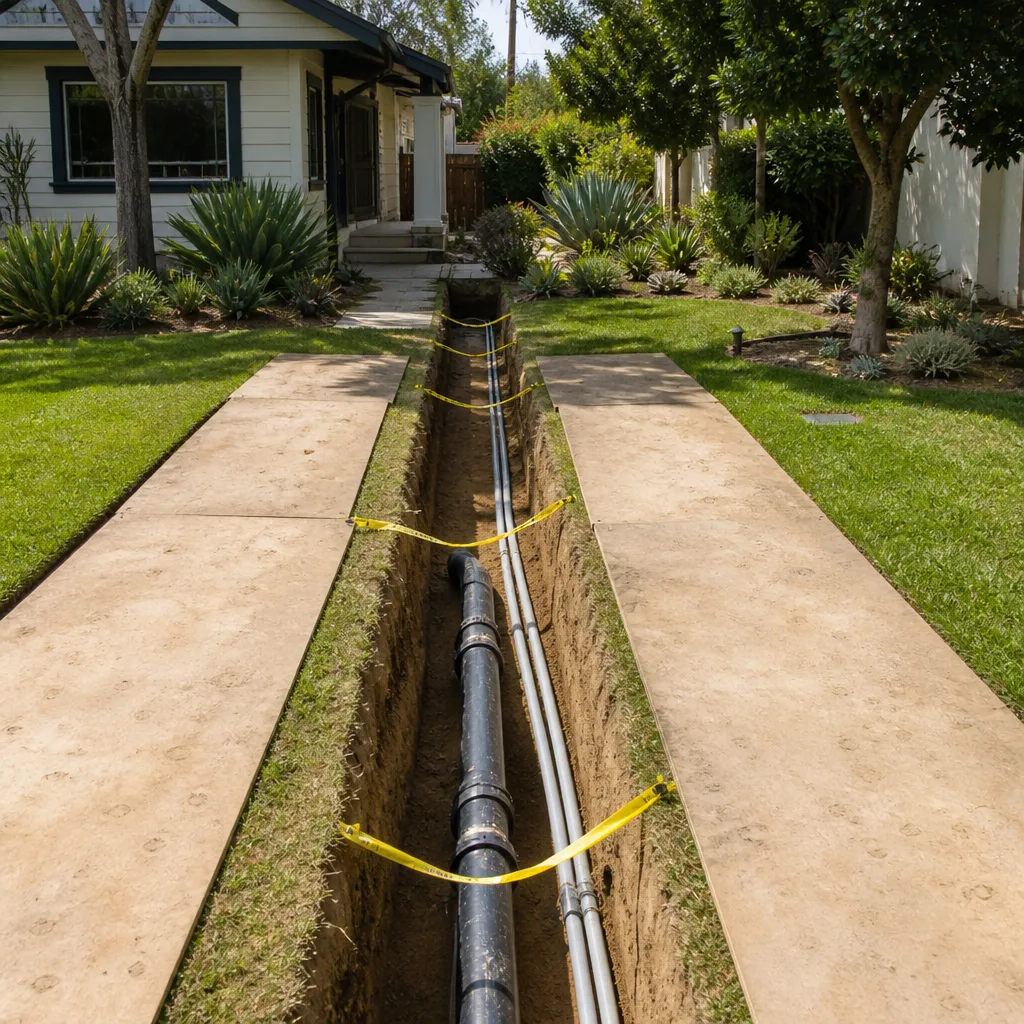
In Fresno, you’re looking at $18,000 to $45,000 for a complete site prep and utilities package on a Cover unit. The spread comes down to three things: how far your utility connections are from the main lines, whether your existing electrical service needs an upgrade, and what the soil test reveals about compaction requirements. A flat lot in an established neighborhood with a 200-amp panel and sewer within 40 feet will land on the low end. A lot in the foothills with a 100-amp panel and a sewer line 150 feet away will push toward the top.
Every quote we write includes the full parts breakdown: pad materials, trenching labor, conduit, wire, pipe, connectors, city permit fees, and the final utility connection sign-off. You get a written price before any work starts, and that price doesn’t change unless you change the scope. The work is covered under our 365-Day Done Right Promise. If something in the site work fails within a full calendar year of completion, we come back and make it right, no haggling.
DIY or Call Us?
You can safely check a few things yourself: look for visible settling at the foundation edges, test water pressure at an exterior spigot with a cheap gauge, and watch for tripping breakers when both the AC and a space heater run. Those observations help us diagnose faster when we arrive.
What you shouldn’t do is dig. Trenching for electrical and gas lines in Fresno requires utility locates, proper depth, and in some cases a city inspector on site before backfill. A wrong shovel hit on a gas line or a poorly sloped sewer lateral turns a $2,000 repair into a $20,000 emergency. This is one of those places where the Cost of doing it twice far outweighs the price of doing it once. If you’re seeing any of the symptoms above, call us at (559) 785-0627 and we’ll send someone out to take a look. Tell me what you actually need, then we’ll figure out what makes sense.
FAQs
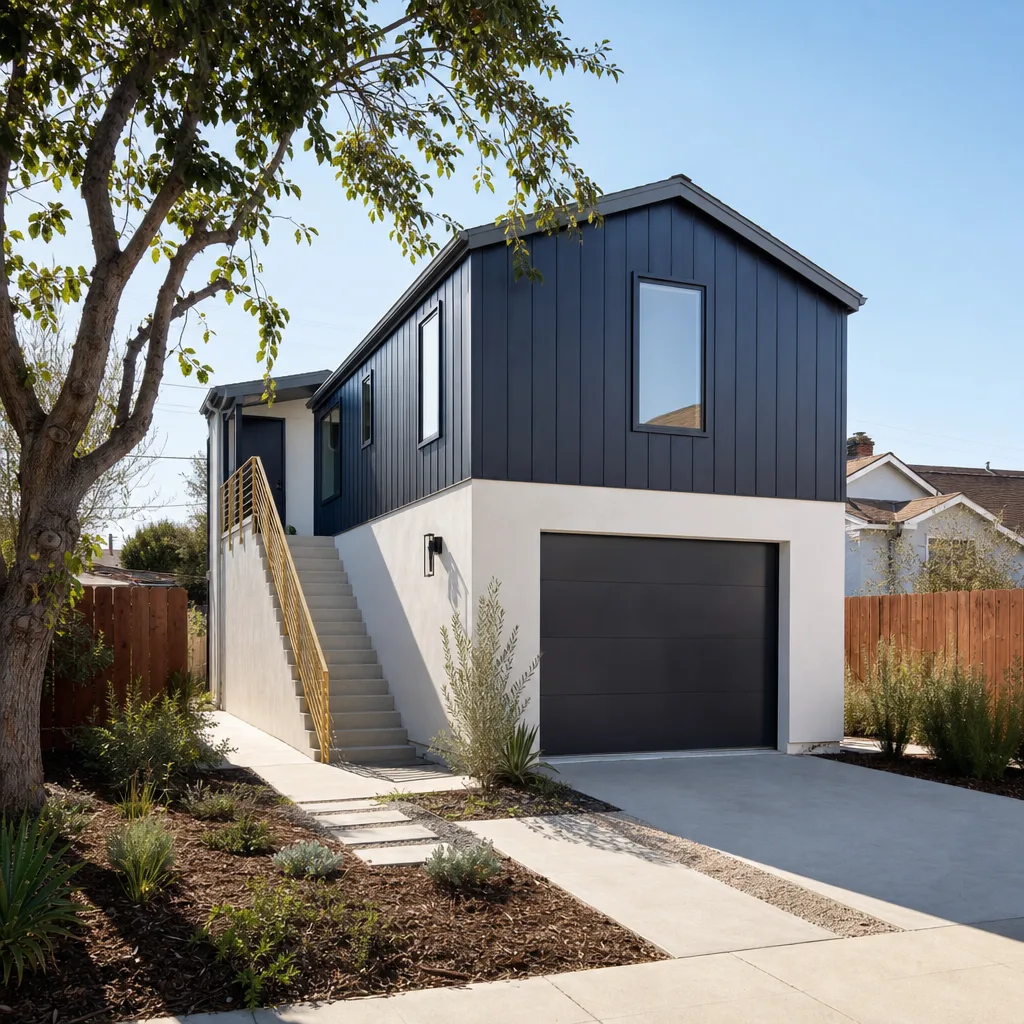
A properly compacted pad and correctly installed utility connections should last 30 to 50 years in Fresno’s climate. The main variable is soil moisture, which is why we compact in lifts and add drainage at the pad perimeter. Foundation settlement in the first two years is the most common failure we see, and it’s almost always a compaction issue, not a material failure.
Most site prep failures are repairable. Settled pads can be lifted and re-shimmed, utility connections can be re-trenched without disturbing the structure, and subpanels can be upgraded in place. A full redo is rare and usually only happens when the original work was so far out of spec that patching would cost more than starting over. Call (559) 785-0627 and we’ll give you an honest read on which path applies to your situation.
Plan on two to four weeks from first dig to final utility sign-off, depending on city inspection scheduling and utility company response times. The physical work is usually a week or less; Fresno’s permitting and inspection calendar is the variable.
We keep the common components on our trucks: foundation brackets, conduit, panel hardware, pressure regulators, and compaction materials. Anything model-specific, like custom anchor plates, we source from Cover’s approved supplier network, usually within a week. We also maintain familiarity with site requirements for Abodu and Dvele units if you’re comparing products.
Written by Miles Hartwell, Owner, Sutton ADU Fresno at Sutton ADU Fresno, serving Fresno and nearby areas.