Last updated October 15, 2026
ADU Warning Signs: A Fresno Homeowner’s Reference Guide
Most people picture a bad contractor as someone who disappears halfway through the job or leaves a foundation crack running wall to wall. The truth is less theatrical. The contractors who cost Fresno homeowners the most money usually finish the project. They show up. They pour concrete and hang drywall. What they do not do is tell you who is actually on your property, what the permit actually covers, or why the “small change” they just made will cost you another $14,000. This guide, alongside our The Complete Guide to ADU in Fresno, catalogs those quieter signals, the ones experienced ADU buyers in Fresno learn to treat as hard stops. By the time you finish reading, you’ll know exactly what to ask before you sign, what to watch for during the first two weeks on site, and which lines in a contract are actually risk transfer wearing polite language.
Quick Answer
The most reliable ADU contractor warning sign in Fresno is vagueness about crew: if a builder can’t name the specific people who will work on your property, or won’t give you a written price before starting, treat it as a red flag. Other hard stops include: refusal to show past Fresno permits, a bid that’s suspiciously lower than two comparable quotes, and contract language that says prices or schedules are “subject to conditions.” A reputable Fresno ADU builder writes the price down first, sends you crew names and photos before anyone arrives, and backs the workmanship with a written guarantee. For a deeper look at this decision, see our DIY vs Professional ADU: The Fresno Homeowner’s Decision Guide.
Table of Contents
- Contract Language Red Flags: What Fine Print Actually Transfers to You
- The Permit-Pull Test: Verifying a Contractor’s Fresno Track Record
- Crew Transparency Signals: “My Guys” vs. Named Subcontractors
- How to Recognize a Lowball Bid Designed for Change Orders
- Early Construction Site Signals That Indicate Corner-Cutting
- Prefab and Panelized Systems: Warning Signs Specific to Factory-Built ADUs
- Common Mistakes to Avoid
- When to Call a Professional
- Frequently Asked Questions
Contract Language Red Flags: What Fine Print Actually Transfers to You
A construction contract is not a formality. It is a risk-allocation document, and the language buried in it decides who pays when the ground in Fresno’s harder-than-expected clay soil adds two days of excavation, or when lumber prices shift mid-build. Most homeowners read the price and the start date and skim everything else. Here are the specific phrases that should make you stop, set the pen down, and ask questions.
“Price subject to change based on site conditions.” On its surface this sounds reasonable. And it is, within limits: no one can know exactly what’s underground until you dig. But written without a cap or a defined process, this clause transfers unlimited risk to you. The contractor can discover “unforeseen conditions” that double the site work cost, and you have no contractual basis to push back. A well-written contract ties any price adjustment to specific, documented findings and requires the contractor to show you the evidence before charging you. Ask for a fixed-price contract with a written change order process: any price change must be in writing, signed by you, before the work happens. That one sentence protects you from the most common Fresno ADU cost overrun.
“Schedule is approximate” or “schedule subject to weather and material availability.” Construction schedules shift. That’s reality. But “approximate” without defined limits means the project can drift for months with no consequence to the builder, while you’re carrying the construction loan or renting elsewhere. Ask for a schedule with milestones tied to dates, and ask what happens if a milestone slips by more than 30 days. The answer tells you whether the builder sees the schedule as a commitment or a suggestion.
“Contractor may substitute materials of equal quality.” This clause lets the builder swap the James Hardie siding you specified for a lower-cost alternative without asking you. In Fresno’s summer heat, the difference between a premium cladding system and a generic one is not cosmetic; it’s measurable in swelling, fading, and replacement cycles. If you specified a brand or a product line, the contract should say so by name, and any substitution should require your written approval.
“Homeowner responsible for all permit fees and city requirements.” You will pay permit fees. That’s normal. But this clause sometimes hides a bigger problem: the contractor may not know Fresno’s ADU-specific code requirements and plans to figure them out on your dime. A builder who works regularly in Fresno can tell you, before you sign, what the city’s parking, setback, and height rules will require for your lot. If they can’t, that vagueness will become your invoice later. One more line to watch: “Contractor not responsible for delays caused by permitting.” If the builder is pulling the permit, they own that timeline. If they’re putting it on you, they’re also putting the risk on you.
The Permit-Pull Test: Verifying a Contractor’s Fresno Track Record
This is the fastest, most objective way to separate experienced Fresno ADU builders from everyone else, and almost no one does it. The test is simple: ask the contractor for the addresses of two or three ADU projects they completed in Fresno County in the past three years. Then check those addresses against the City of Fresno’s online permit portal. If the addresses show permitted work matching the project type, the builder is legitimate. If the addresses don’t exist, or the permits don’t match, you have your answer.
Why does this matter? Because unpermitted work transfers directly to the current owner, not the contractor who built it. When you buy or inherit a property with an unpermitted ADU, the liability for the code violations is yours. The city can require you to bring the structure up to current code, which may mean opening walls, replacing electrical panels, or in the worst case, removing the structure entirely. Lenders are also increasingly unwilling to finance properties with unpermitted square footage, and your homeowners insurance may deny claims tied to the unpermitted structure.
The permit-pull test reveals three things at once. First, does the contractor have a real track record in Fresno, or are they a generalist from another market experimenting with ADUs? Second, are they willing to be transparent about past work? A builder who hesitates, stalls, or says “the addresses are confidential” is telling you something important. Third, do they understand Fresno’s specific ADU ordinance? Fresno has updated its ADU rules in recent years to align with state law, including provisions for setback reductions, parking exemptions for ADUs near transit, and a streamlined review path for certain prefabricated units. A contractor who has pulled permits here knows these details. One who hasn’t will learn them on your project, at your cost.
One clarification: the existence of a permit does not guarantee the work was done well. But permits do create a paper trail that forces inspections at key stages, which we’ll get to below. The absence of a permit guarantees something worse: no inspection ever happened.
Crew Transparency Signals: “My Guys” vs. Named Subcontractors
The single most reliable warning sign of a problem ADU contractor has nothing to do with price. It’s the inability to give you a straight answer about exactly who will be on your property and when. Vagueness about crew is almost always vagueness about accountability. If the builder cannot name the concrete sub, the electrician, and the framer before the project starts, you should ask why. You’re about to hand strangers the keys to your backyard and, often, access to your home’s interior. Needing to know their names is not being difficult. It’s the baseline.
Experienced builders work with the same subs repeatedly. They can tell you, “Raul does our framing, we’ve worked with him for six years, he’ll be on site days one through four.” A builder who says “my guys” and waves the question away is telling you one of two things: either they use day labor from project to project, which means inconsistent quality and no one to hold accountable, or they don’t want you to know who’s actually doing the work because the people they send won’t match the people they promised.
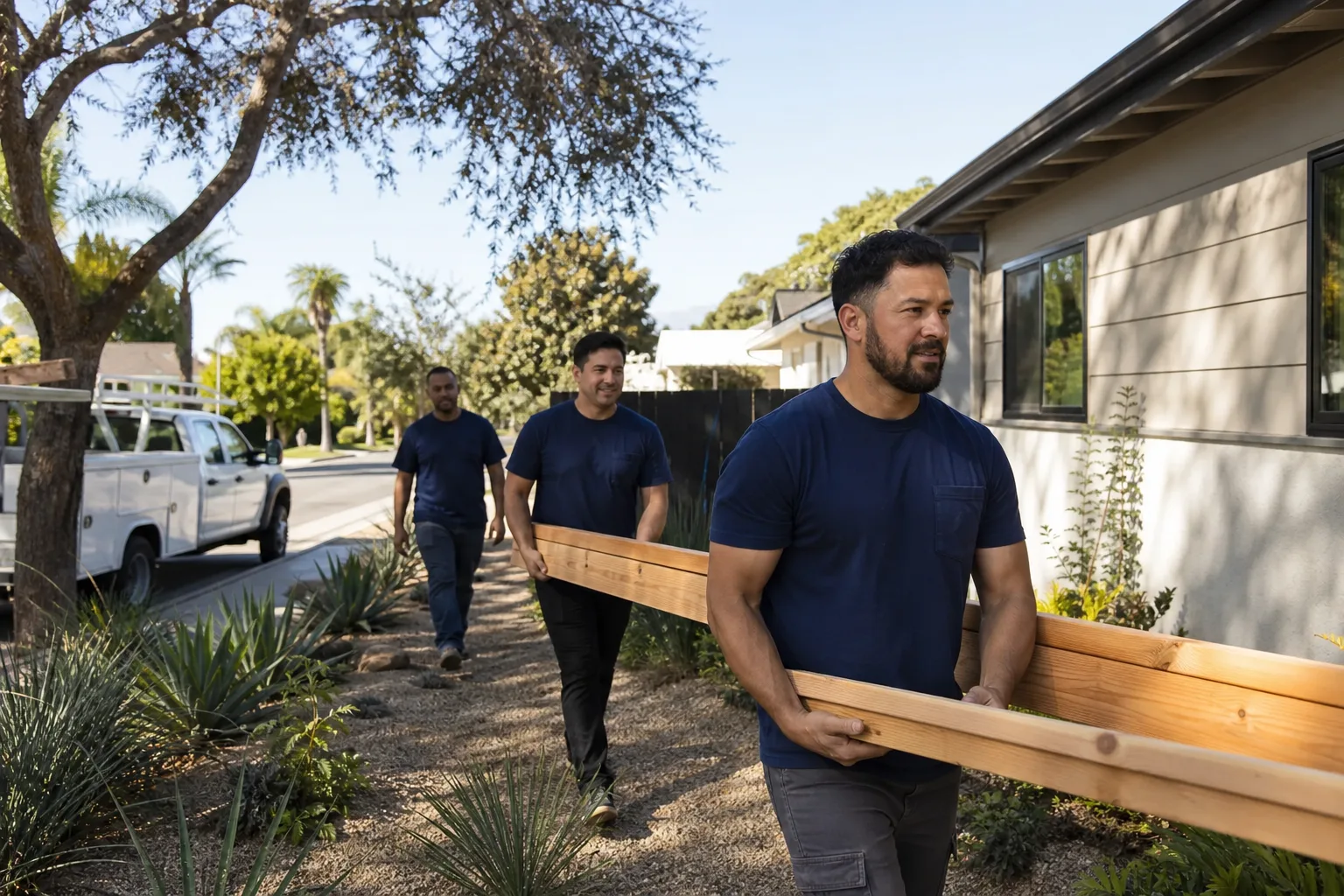
There’s a system-level difference worth naming here. Some Fresno ADU companies, including our own, operate under what we call the Threshold Standard: every field technician is background-checked, identity-verified, uniformed, and carries a photo ID badge, and the homeowner receives the name and photo of each person before they arrive. That’s not a marketing phrase. It’s a process that exists precisely because homeowners told us the unknown-crew problem was their biggest hesitation. When you compare bids, ask each builder directly: “Will you send me the names of every person who will be on my property before they arrive?” The way they answer tells you more than any online review.
Also ask whether the builder carries workers’ compensation insurance for everyone on site. In California, a contractor who hires uninsured day labor is exposing you to liability if a worker is injured on your property. A legitimate Fresno ADU contractor will have a current certificate and will show it to you without being asked twice. The one who says “don’t worry about that” is, unfortunately, telling you to worry about exactly that.
How to Recognize a Lowball Bid Designed for Change Orders
Fresno’s ADU market has a particular vulnerability to this pattern because our construction costs are lower than coastal California, which draws in out-of-town contractors looking to win bids at thin margins and make them up elsewhere. Here’s how the play works: the builder submits a bid that’s 20 to 30 percent under everyone else, you sign, work begins, and then the change orders start. “The soil is worse than we thought.” “The existing electrical panel can’t handle the load, that’s outside our scope.” “The plans you approved don’t match current code for that specific condition.” Each one sounds specific and technical. Each one adds thousands to the project.
The tell is in the original bid’s line items. A lowball bid is almost always vague at exactly the places where costs usually hide. Look for these specific gaps:
- No site work line item, or a suspiciously small one. In Fresno, site work means grading, trenching for utilities, and sometimes soil remediation. This is one of the most variable costs on any ADU project. A bid that glosses over it is planning to “discover” the costs later.
- No allowance for utility connections. Tying into existing water, sewer, and electrical can run several thousand dollars depending on where your taps are. If the bid doesn’t name a specific number for this, it will become a change order.
- Vague language about foundation type. Post-tension slab, raised foundation, piers. These cost different amounts and perform differently in Fresno’s expansive clay soil. A bid that says “foundation: as needed” is a bid with a built-in surprise.
- No line item for plan review and permit fees. Fresno’s permit fees are predictable if you know the system. A bid that omits them will present them to you after you’re committed.
- An unrealistically short timeline. A 400-square-foot detached ADU cannot be permitted, foundation-poured, framed, roughed in, finished, and inspected in three weeks in Fresno. A bid that promises this is a bid that plans to ask for extensions, and each extension in time is an extension in cost.
The antidote is boring but effective: get three written bids, and ask each builder to break out site work, utilities, permits, and foundation separately. The bid that’s dramatically lower will almost always be vague on these specific items. The bid that’s honest will name numbers for each. A written price before any work starts, with defined line items, is the difference between a budget and a guess. It’s also the difference between a builder who knows their costs and one who plans to find your money after the foundation is in.
Early Construction Site Signals That Indicate Corner-Cutting
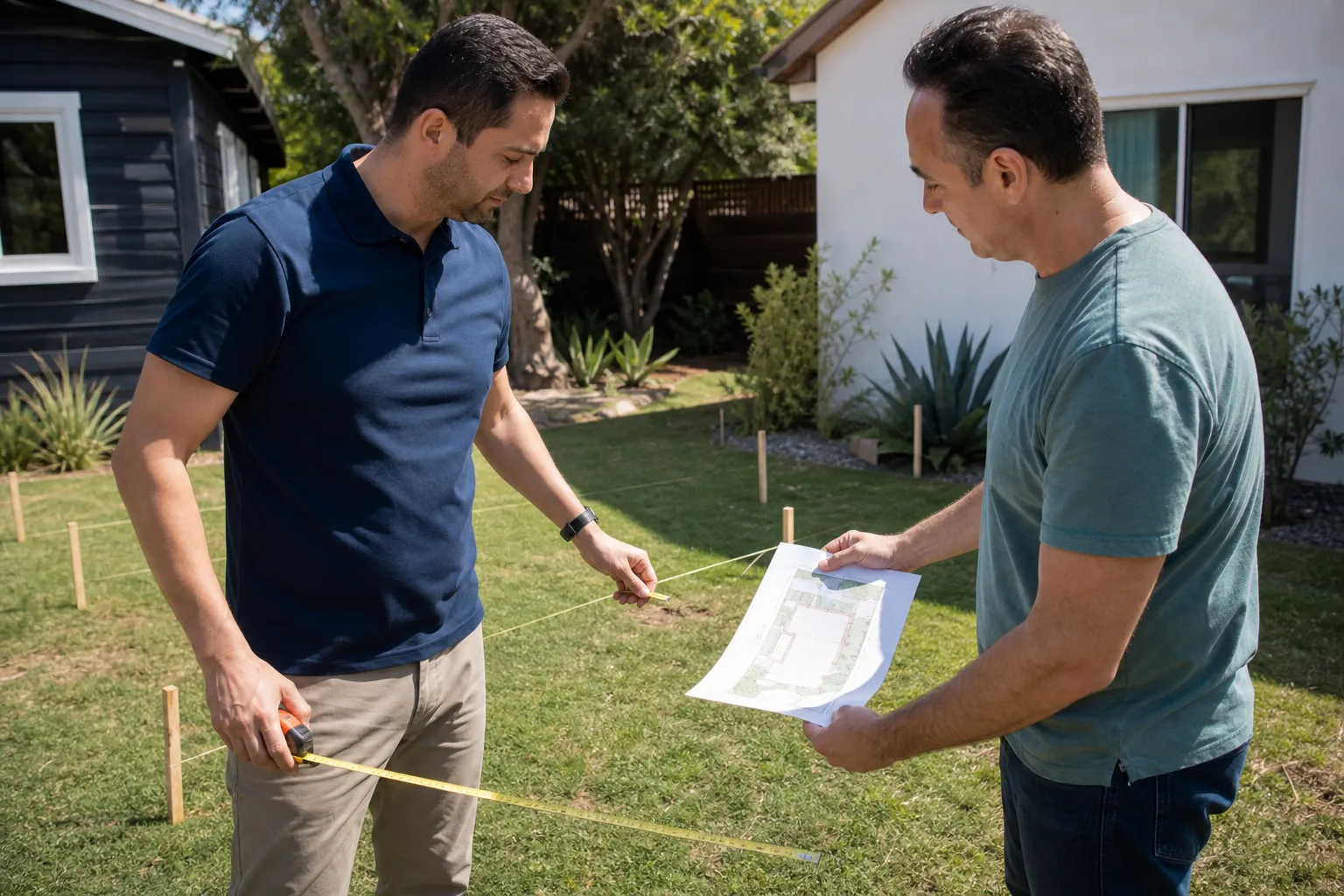
You do not need to be a contractor to read the first two weeks of construction. Once work begins on your Fresno property, several specific signals indicate whether the crew is following real construction practice or cutting steps that will cost you later. Here’s a sequenced guide to what should happen and what a shortcut looks like.
- Concrete form removal timing. After a slab or footing pour, the concrete needs time to cure before forms are stripped. Stripping forms too early produces spalling, chipping, and weakened edges. In Fresno’s hot, dry summers, concrete actually cures faster than in cool climates, which is why some crews try to rush it. Standard practice is to leave slab forms in place for at least 24 to 48 hours, and footings longer in cooler months. If you see forms pulled the same afternoon as a hot-day pour, that’s a shortcut.
- Stucco scratch-coat cure time. If your ADU uses stucco, the scratch coat needs to cure before the brown coat goes on. In Fresno’s dry heat, proper curing means keeping the scratch coat damp for a curing period of 48 hours or more, not just blasting it with a hose once and moving on the next day. If you see the brown coat go up within 24 hours of the scratch coat, the finish will crack and delaminate within a couple of seasons.
- Framing inspection sequence. This one is non-negotiable. The framing inspection must happen and pass before insulation and drywall go up. A builder who covers framing without sign-off from the city is hiding something, because any framing problem that’s now sealed behind drywall cannot be seen again without demolition. Ask to see the signed inspection card after the framing inspection. The City of Fresno requires this sequence, and any builder who skips it is either not actually pulling permits or is deliberately avoiding the inspector’s schedule.
- Weather protection for stored materials. Lumber left uncovered on bare dirt during a Fresno winter rain event is absorbing moisture that will move and warp as it dries. A reputable crew covers materials, stores them off the ground, and doesn’t frame with wet lumber. If you see a pile of exposed lumber sitting in the mud, mention it on the same day. You’re paying for those sticks.
- Trench and utility line safety. Before any trenching starts, the crew should have called 811 and marked the underground utilities. In some Fresno neighborhoods, gas and electrical lines run through backyards in patterns that aren’t obvious from the street. If you see trenching begin with no spray-paint utility marks on the ground, stop the work and ask. A gas line hit is not a delay; it’s a potential disaster.
- Slab elevation and drainage planning. Fresno gets enough winter rain that a slab set too low, or a grade that slopes toward the structure, will channel water into your ADU every winter. Watch the initial site pad: the finished slab should sit slightly above the surrounding grade, and the lot should slope away from the structure on all sides. If the pad is lower than the surrounding ground, that’s a drainage problem being built into the project.
Prefab and Panelized Systems: Warning Signs Specific to Factory-Built ADUs
Fresno homeowners increasingly choose prefab and panelized ADU systems like Abodu, Dvele, Cover, and James Hardie-clad structures because they move faster and come with factory-controlled quality. But factory-built doesn’t mean risk-free, and the warning signs for prefab projects are different from stick-built ones.
First, ask who is responsible for site work, because the factory is responsible for the unit and the contractor is responsible for the ground it sits on, and the gap between those two scopes is where prefab projects go wrong in Fresno. A factory unit can be flawless and still fail if the foundation it sits on was poured out of level, or if the utility stubs were placed six inches off spec. Ask for a written site-work scope from the builder that matches the factory’s foundation spec exactly. If the builder says “we’ll figure it out on site,” that’s the same vagueness problem wearing a factory logo.
Second, ask about Fresno’s specific inspection path for prefab units. Some factory-built ADUs are HUD-approved or modular-certified, which changes how the city inspects them. Fresno’s planning department has processed enough prefab ADUs in recent years that an experienced local builder can tell you exactly which route your unit will take. A builder who treats a Dvele unit as a site-built addition without acknowledging the modular approval path is going to hit permitting friction.
Third, confirm who handles the warranty, and confirm it in writing with a named contact. With prefab systems, the unit manufacturer warranties the structure, and the site contractor warranties the foundation and connections. If the builder you’re talking to can’t tell you which parts they warranty and which parts the factory warranties, you’re signing up for a game of warranty ping-pong the first time something fails. At Sutton ADU Fresno, we’ve worked with recognized product lines including Abodu, Dvele, and James Hardie cladding systems, and we write the warranty boundaries into the contract so there’s no ambiguity about who fixes what.
Common Mistakes to Avoid
- Signing before checking permits on past jobs. The permit-pull test costs you 20 minutes and one visit to the city’s online portal. Skipping it is the most expensive time-saver in the industry. A Fresno contractor with no verifiable permitted ADU projects is a risk you’re choosing voluntarily.
- Accepting a verbal price. “We’ll work it out as we go” is not a pricing strategy; it’s an open invoice. Written prices protect both parties, and any builder who resists putting a number on paper is telling you how they’ll bill: freely.
- Comparing bids by bottom line only. Two bids can both say $240,000 and mean entirely different things. One includes site work, utility connections, permits, and a defined finish schedule. The other doesn’t. Compare line items, not totals.
- Ignoring the crew question because it feels awkward. Asking who will be on your property is not rude. It’s the single most direct question about accountability you can ask. If the answer makes you uncomfortable, that’s information.
- Overlooking the drainage grade. Fresno’s winter rains and clay soil make drainage a make-or-break detail. A slab set too low is a permanent water problem. Check the pad elevation before the concrete trucks arrive.
- Assuming prefab means simpler. Factory-built units still need site work, utility connections, and a foundation that matches the factory spec. The complications move from the walls to the ground, but they don’t disappear.
- Treating the framing inspection as optional. It’s not. Drywall goes up only after the inspector signs off. If a builder wants to cover framing without that sign-off, you’re now the owner of a hidden condition you’ll pay to uncover later.
When to Call a Professional
Some warning signs you can resolve with a conversation. Others mean it’s time to bring in someone who has built ADUs in Fresno before and can look at your specific lot, your specific contract questions, and your specific site conditions. Call a professional if: a contractor won’t give you past Fresno permit addresses, a contract contains open-ended price or schedule language you can’t get clarified, work has already begun and you’re seeing form-stripping or stucco-curing shortcuts, or you’re comparing prefab system proposals and can’t tell where the factory warranty ends and the site warranty begins. These are the moments where an experienced eye saves you tens of thousands of dollars and a year of frustration. For ongoing protection, bookmark our Home Addition Contractor Maintenance Checklist for Fresno Homeowners. If you’re in Fresno and want a plain-spoken assessment of your ADU plan, your existing contract, or a new site, Sutton ADU Fresno offers free estimates. Call (559) 785-0627 and we’ll walk you through exactly what you’re looking at, on paper, before you spend another dollar.
Frequently Asked Questions
Ask the contractor for addresses of two or three completed ADU projects in Fresno County, then look those addresses up on the City of Fresno’s online permit portal to see if the work type matches. If the contractor hesitates, can’t produce addresses, or the addresses show no permits, treat that as a decisive red flag.
In the Fresno market, most detached ADUs in the 400 to 800 square foot range run $180,000 to $320,000 before site work, depending on finishes, foundation conditions, and whether you choose site-built or factory-built systems like Cover or Dvele. Site work and utility connections add another $15,000 to $45,000 on many Fresno lots. Call (559) 785-0627 for a written, line-item quote specific to your property.
It means the contractor has written themselves the right to raise your price without your approval, provided they can characterize the increase as tied to site conditions. A better contract names a specific change-order process: any price change in writing, signed by you, before the work happens.
It shouldn’t, if you have a written fixed-price contract with defined line items and a change-order process that requires your signature. Price changes happen when the original bid was vague on site work, utilities, or foundation, or when the contract contains open-ended language. We write the price before any work begins and that number doesn’t move unless you approve a written change.
A detached ADU in Fresno typically takes 5 to 9 months from permit submittal to final inspection, with factory-built systems like Abodu or Mighty Buildings trending toward the shorter end once permits clear. Permitting itself can take 4 to 10 weeks depending on plan review load at the city. Any bid promising a complete build in under two months should be examined closely.
Yes. Converting a garage to an ADU in Fresno requires building permits, and the conversion must meet current residential code for insulation, electrical, ceiling height, and egress. Unpermitted conversions transfer their liability to you as the property owner and create problems at resale, with lenders, and with your insurance.
The Bottom Line
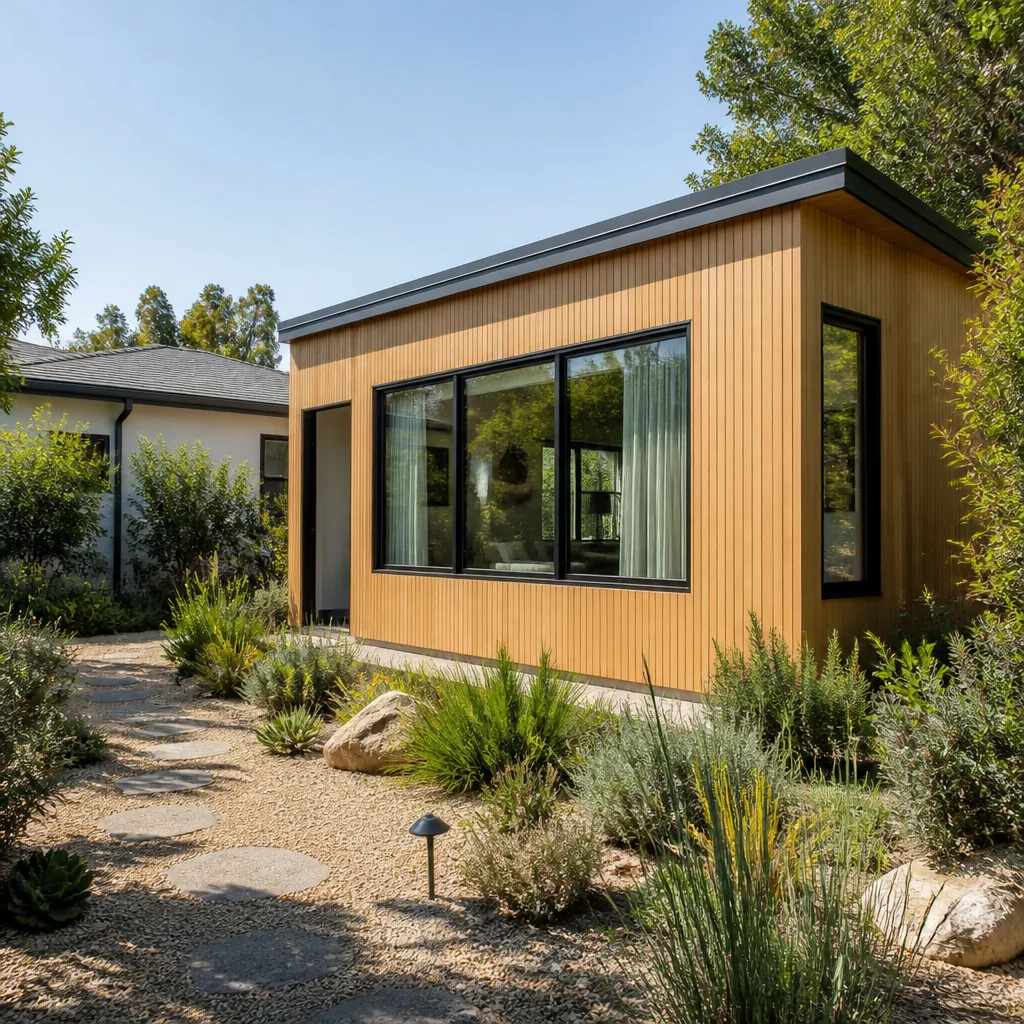
ADU warning signs in Fresno are rarely dramatic. They show up as vague bid line items, a contractor who can’t name his crew, a permit history that doesn’t hold up, or a schedule clause that means “whenever.” The patterns are legible if you know where to look. Check the permits. Demand names before anyone opens your gate. Read the contract for the phrases that transfer risk. Watch the concrete forms and the stucco cure. Every one of these signals is the contractor telling you, ahead of time, how they’ll behave when problems appear. The builders worth hiring in Fresno write the price down first, put the crew’s names in your hand before arrival, and stand behind the work in writing for a full year. You don’t need to be an expert to choose well. You need to ask the right questions before you sign. Explore more guides & resources to keep your project on track.
Written by Miles Hartwell, Owner at Sutton ADU Fresno, serving Fresno since 2006.