Tuff Shed Site Prep & Utilities: The Fresno Owner’s Guide
Site prep and utility rough-in for a Tuff Shed conversion in Fresno typically runs $8,000 – $24,000 depending on whether you’re trenching new electrical service, pouring a reinforced slab, or tying into an existing sewer lateral. We stock the materials and run the crews for this work daily, and most jobs are completed in three to seven working days once permits clear. You usually discover this “part” has failed when you open the door on a summer afternoon and the floor has shifted half an inch off level, or the breaker feeding your shed-converted office trips every time the AC kicks on. What looked like a sturdy building three years ago is now fighting the expansive clay soil that runs through much of Fresno’s northeast neighborhoods, and the fix starts underground before it ever touches the structure.
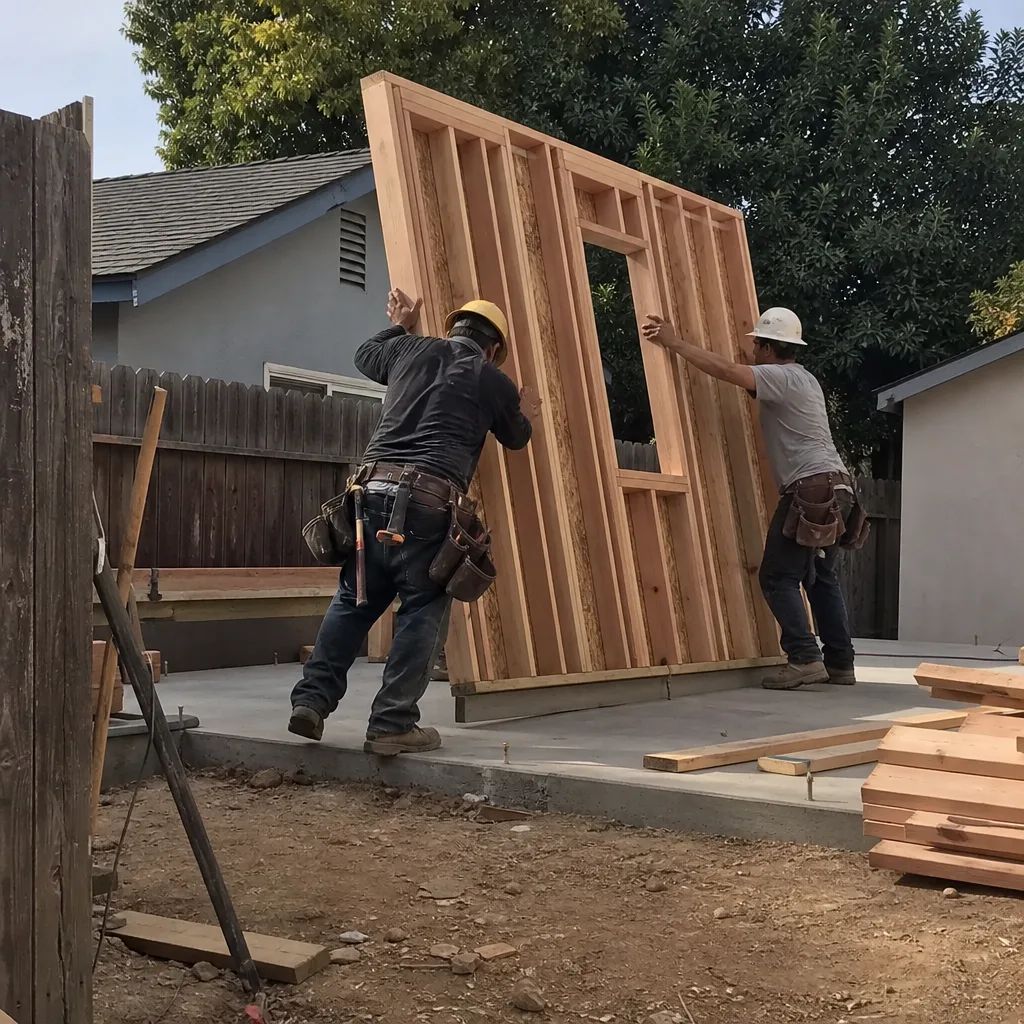
Which Tuff Shed Models This Applies To
Every Tuff Shed model shares one common weak point: the factory ships a building, not a foundation. Whether you have a Premier Pro Tall Barn, a Premier Ranch, or a Pro Studio, the floor system is engineered to sit on a level, well-drained pad. What varies is how much tolerance each model has for imperfect ground. The Pro series sits directly on a perimeter beam, so a 1-inch differential settlement across a 10-foot span will bind the doors and pull the corner trim loose. The Premier series uses a thicker floor joist package, but it still relies on the site being graded and compacted before delivery. Here’s the compatibility gotcha most Fresno owners don’t learn until it’s too late: Tuff Shed’s own warranty covers the building, not the site. If the pad fails, the building manufacturer isn’t coming back. The aftermarket solution for site prep isn’t a replicated part, it’s doing the civil work right the first time. Where OEM-vs-aftermarket matters is in the utilities: a standard 100-amp subpanel fed from your main service works fine for a home office or gym, but if you’re converting to a legal ADU, the City of Fresno will require a dedicated meter or a documented load calculation, and off-the-shelf parts from a big-box store won’t meet code on their own.
Signs Your Tuff Shed Site Prep & Utilities Is Failing
- Doors stick or bind in the frame, especially after rain. The slab or pier blocks have shifted, and the floor is no longer in plane. The doors are the first place you’ll see it because their tolerances are the tightest.
- Visible cracks running through the pad or perimeter beam. In Fresno’s summer heat, concrete cures fast and shrinks. Hairline cracking is normal. Cracks wider than 1/8 inch that stay open after the weather cools mean the subgrade wasn’t compacted in lifts.
- Circuit breakers trip when you run more than one appliance. A shed wired with 14-gauge Romex on a 15-amp circuit was never designed for a mini-split plus a refrigerator. Undersized electrical rough-in is the most common utility failure we see in buildings converted after the fact.
- Water pools at the base of the wall after a hard storm. The grade around the pad wasn’t sloped away, or the pad sits below the surrounding grade. Fresno’s winter storms aren’t frequent, but when they hit, they expose drainage problems in minutes.
- You smell sewer gas from a drain that was added later. Improper venting or a dry P-trap on a DIY DWV line is a code violation and a health hazard. This one needs a licensed plumber to sort out.
Replacement Cost & What’s Included
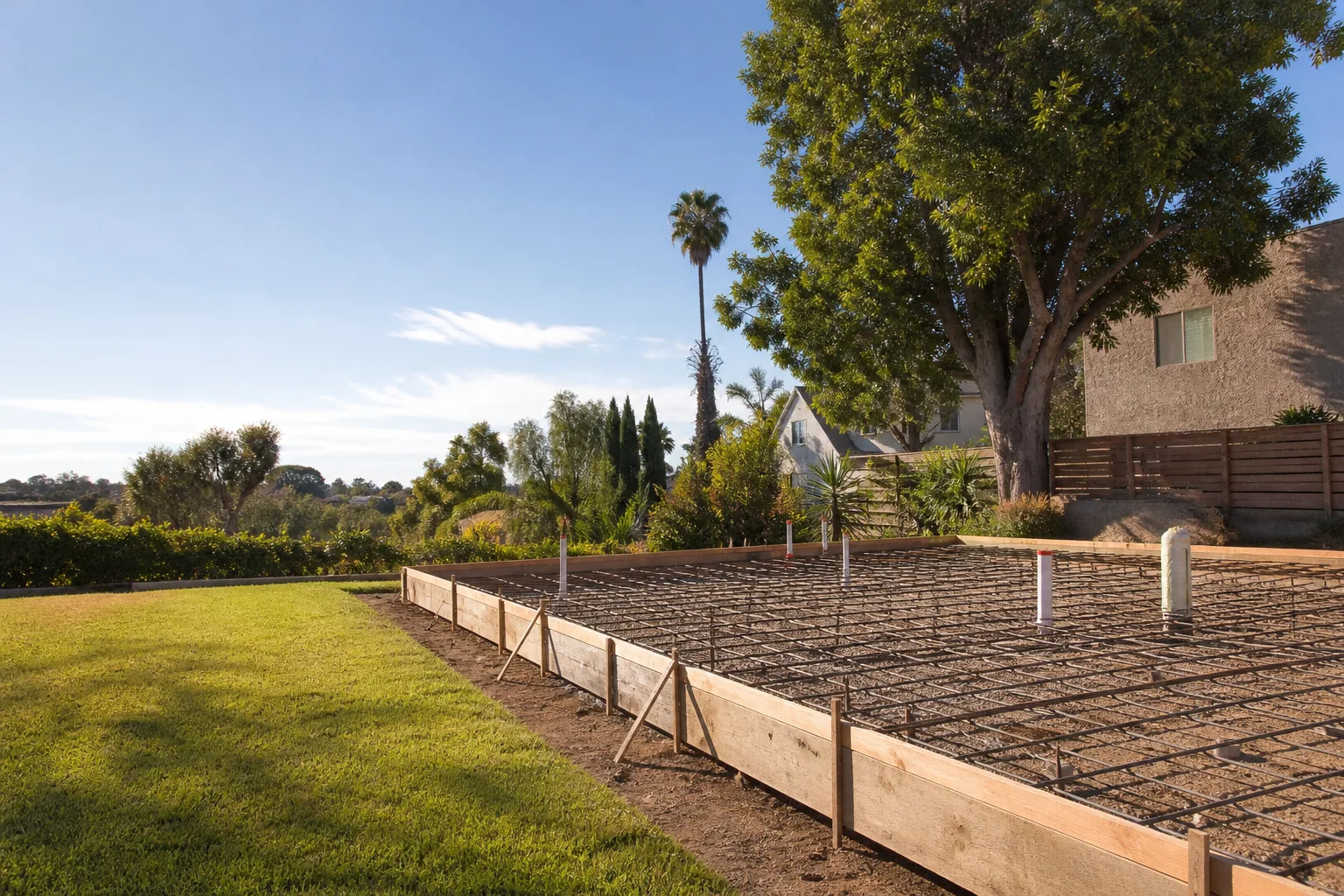
For a no-permit site correction on an existing Tuff Shed, like re-grading, adding crushed stone, or installing pier supports to re-level the floor, most Fresno jobs land between $1,800 and $4,500. For full replacement of a failed pad with proper base, form work, rebar, and a 4-inch slab, you’re looking at $6,000 – $12,000 depending on square footage and access. Utility rough-in runs $3,500 – $8,000 for a new electrical subpanel with trenching, and $6,000 – $14,000 if you’re adding water and sewer for a bathroom or kitchenette. Every quote we write includes the line items: demo and haul-off if needed, base material, concrete or pier hardware, conduit, wire, panel, fittings, permit fees where required, and labor. The 365-Day Done Right Promise covers defects in workmanship for one full calendar year from project completion. That means if the pad you paid us to pour develops a structural crack from our workmanship, not the soil doing what Fresno soil does, we fix it at no charge. You get the written price before we start, and that price does not change unless you change the scope.
DIY or Call Us?
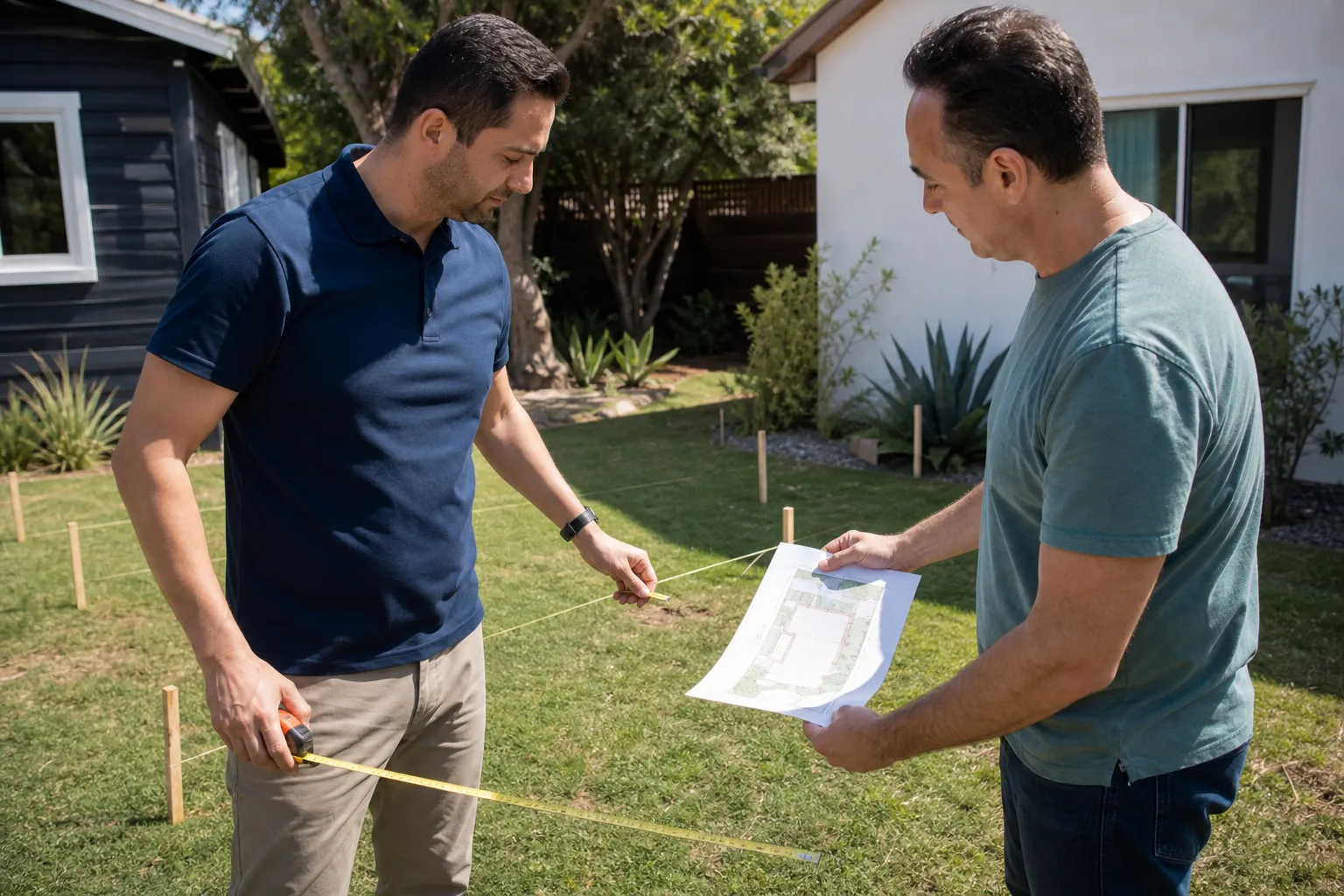
You can check the obvious things yourself: look for standing water after rain, measure the floor with a 4-foot level in both directions, and note which circuits trip and when. That information saves time on the estimate. But here’s where I’ll be direct with you. Site prep is not a weekend project. Moving dirt, compacting base, and pouring concrete that meets Fresno’s code requirements takes equipment, timing, and a crew that knows what the inspector looks for. Electrical rough-in is even less forgiving. A buried conduit that’s too shallow, a ground rod driven in the wrong spot, a panel that’s overfilled. These are the mistakes that fail inspection and cost twice as much to undo. If you’re trenching yourself and hit a gas line, that’s not a bad afternoon, that’s a 911 call. We’ve seen it. Miles Hartwell and the crew have been fixing Fresno sheds and building ADUs long enough to know where the shortcuts live, because we’re usually the ones paying to correct them after a homeowner or a handyman gave it a shot. Tell me what you actually need, then we’ll figure out what makes sense. We’re at (559) 785-0627.
FAQs
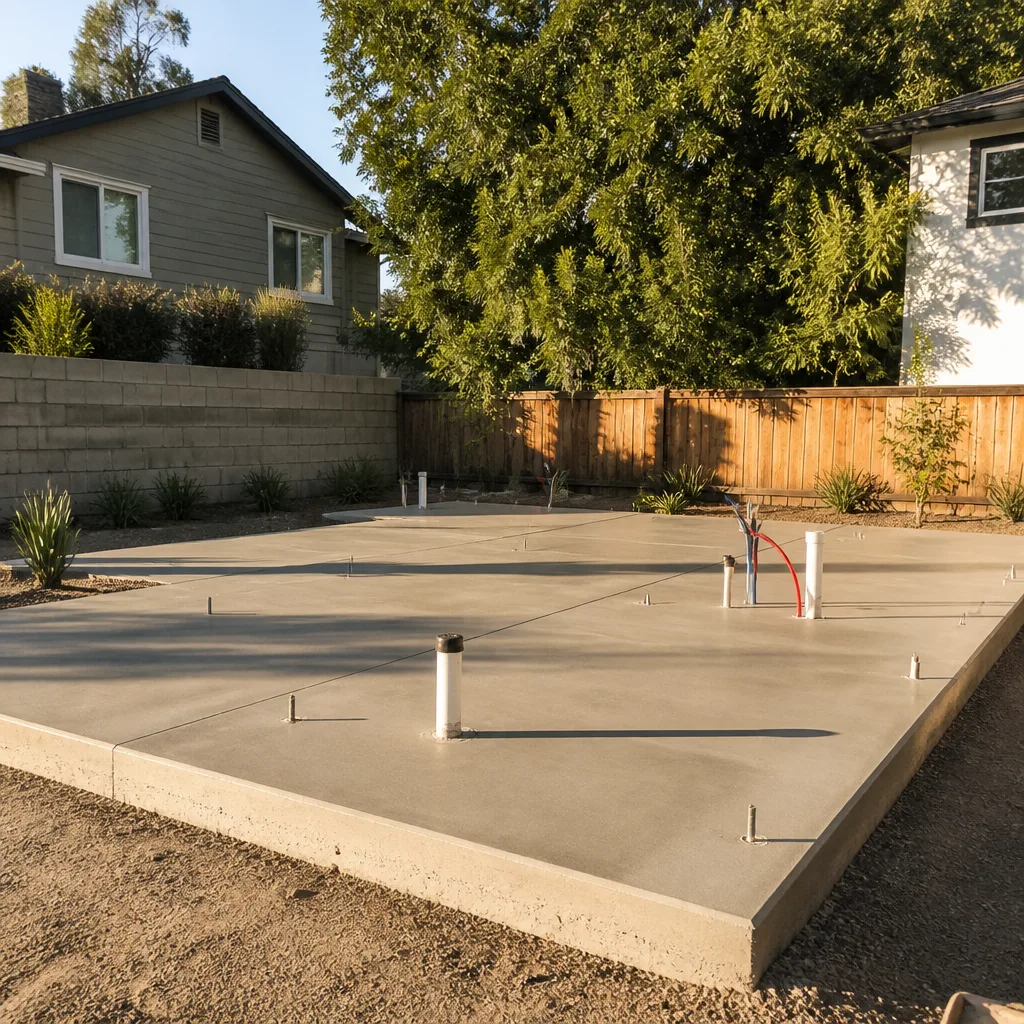
Done correctly, a properly compacted and reinforced concrete pad in Fresno should hold level for 25 to 40 years. The failure we see most often comes from two shortcuts: skipping the base rock layer or pouring directly on uncompacted fill. When the clay soil under the pad expands and contracts with moisture, a pad with no base underneath it moves, full stop. Call us at (559) 785-0627 and we’ll look at what you have before you spend money fixing the wrong layer.
Sometimes, yes. If the cracks are hairline and the slab is still level, epoxy injection and a self-leveling overlay can extend the life of the pad for years. If the slab has actually tilted or settled more than 3/4 inch, repair becomes a band-aid. The fix that stays fixed is lifting or removing and repouring. We’ll tell you straight which one your slab needs. A free estimate gets you that answer.
Permits from the City of Fresno typically take two to four weeks for electrical or plumbing work. Once the permit is in hand, site prep runs two to three days, and utility rough-in can run another two to four days depending on trench length and what the inspector finds. You’re looking at about a week of actual on-site work. The waiting is in the paperwork.
We keep the common items on the trucks: panels, breakers, conduit, grounding hardware, and the connectors most Fresno homes require. What we don’t stock, we source same-day from local supply houses, so we’re never holding up a job waiting on a breaker. If you’re not sure what you need, call us and send photos. We’ll tell you what’s on the truck and what isn’t before you pay for anything.
Written by Miles Hartwell, Owner, Sutton ADU Fresno at Sutton ADU Fresno, serving Fresno and nearby areas.